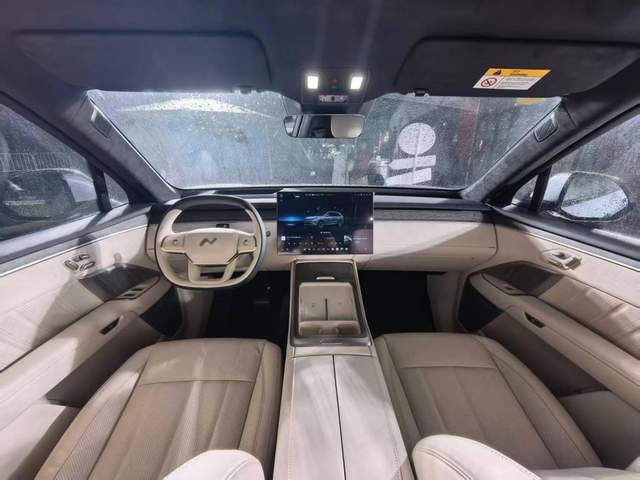
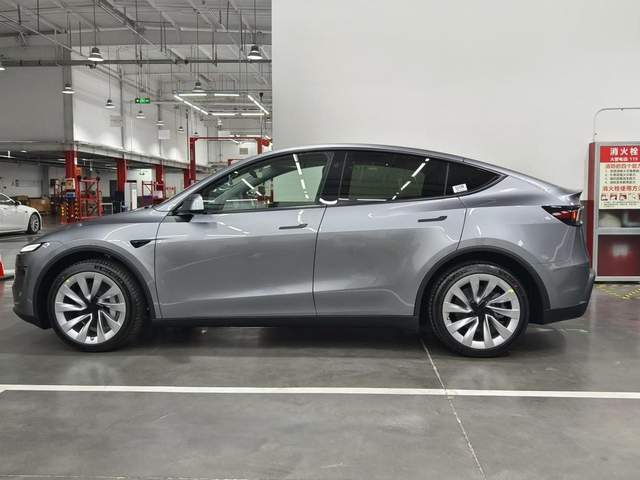
Inside the cabin, the new ONVO L60 takes inspiration from NIO’s flagship models, emphasizing a premium and comfort-focused experience. The interior features wood-grain trim, a floating central display, and NIO’s self-developed SkyOS AI operating system. Rear-seat passengers benefit from a strong focus on comfort, including a 17.3-inch 3K entertainment display, an 8-inch rear control screen, and a 6-liter heating and cooling refrigerator. Rear seats also offer three-level heating, ventilation, and power recline functions, enhancing long-distance travel comfort. By comparison, the refreshed Tesla Model Y continues to embrace a minimalist, screen-centric design philosophy, replacing traditional stalk controls with touchscreen-based operation. While Tesla has added front-seat ventilation and an 8-inch rear touchscreen, the ONVO L60 offers a significantly more comprehensive set of luxury and comfort features for rear passengers.
When it comes to intelligent driving technology, the two vehicles take notably different approaches. The ONVO L60 debuts NIO’s in-house 5nm Shenji NX9031 chip, delivering up to 1,000 TOPS of computing power and integrating advanced AI capabilities. Combined with LiDAR-equipped versions, the system supports point-to-point navigation assistance, including automated highway toll passage and autonomous entry into battery-swapping stations. Tesla’s refreshed Model Y adopts the latest AI 4 hardware platform and continues to rely primarily on a vision-based approach. Although Tesla offers Enhanced Autopilot and Full Self-Driving (FSD) packages, the rollout and real-world implementation in China are still evolving. In complex Chinese driving environments, multi-sensor systems may offer certain advantages compared with purely vision-based solutions.
Powertrain and charging technology represent another key area of differentiation. The new ONVO L60 comes standard with a 900V high-voltage architecture across the entire lineup, significantly improving charging efficiency. The battery can charge from 10% to 80% in just 25 minutes. The single-motor version produces up to 240 kW, while the dual-motor variant delivers a combined 340 kW, exceeding the output of Tesla’s dual-motor Model Y on paper. Under CLTC testing standards, the L60 offers multiple range options spanning from 530 km to 740 km. In addition, it is compatible with NIO’s battery-swapping network, allowing drivers to complete an energy replenishment process in as little as three minutes, further reducing range anxiety. Tesla’s refreshed Model Y continues to benefit from its highly efficient powertrain and improved range figures, reaching up to 593 km for the standard version and 719 km for the Long Range variant. However, its 400V electrical architecture faces increasing competition from newer-generation 900V platforms in terms of charging performance and future scalability.
Overall, the updated ONVO L60 positions itself as a strong challenger in the premium family EV segment, leveraging its strengths in interior comfort, intelligent driving hardware, cabin space, charging technology, and battery-swapping capabilities. Meanwhile, Tesla’s Model Y continues to rely on its established brand recognition, software ecosystem, and global market leadership. The choice between the two ultimately depends on whether consumers prioritize cutting-edge hardware and comfort features or Tesla’s mature software experience and proven market track record.